

 de
de fr
fr
Lake Lucerne
The Heart of Central Switzerland
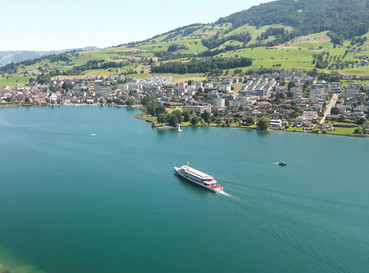
Fjord-like bays, striking peaks and historic lakeside villages shape Lake Lucerne. Between Lucerne, Rigi, Pilatus and the Urnersee, a landscape unfolds that is surprising, diverse, powerful and unique in Switzerland. Those travelling here experience nature, history and panorama in one perfect round trip.
The Lake in Numbers
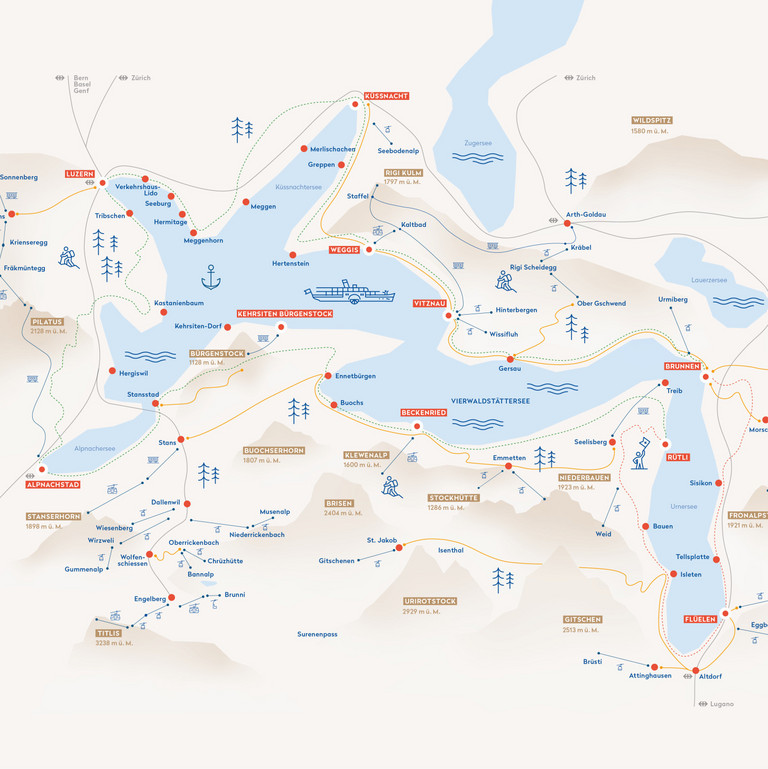
Lake Lucerne is one of the most impressive lakes in Switzerland – not only because of its size, but above all because of its shape and location.
- Surface area: 114 km²
- Shoreline length: 130 km
- Water renewal time: 3.4 years
- Average depth: 117 m
- Maximum depth: 214 m (Gersau Basin)
- Altitude: 433 m above sea level
- Trophic state: Nutrient-poor (oligotrophic)
- Currently 31 boat stations
A Lake in Natural Balance
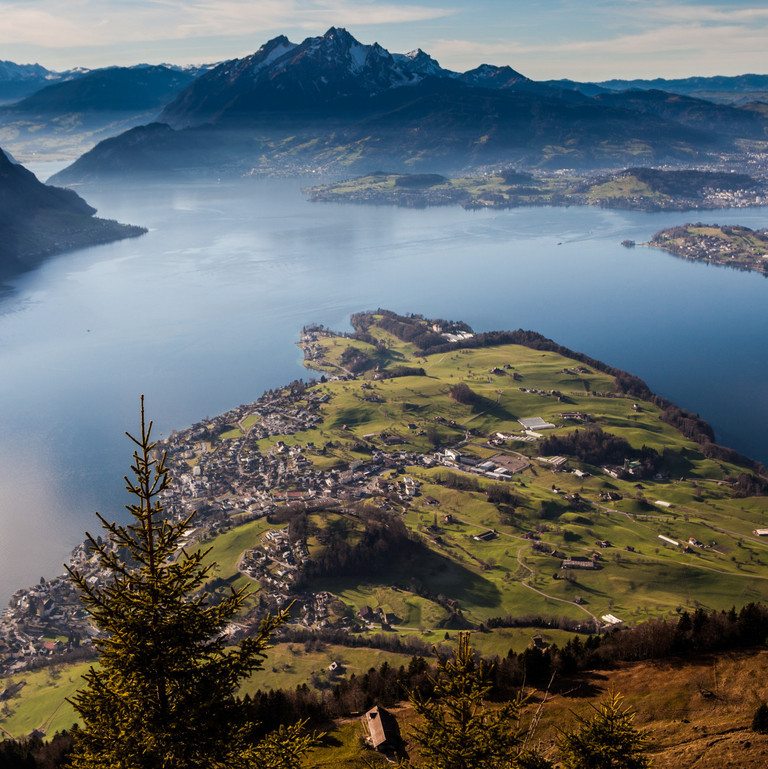
Lake Lucerne is naturally nutrient-poor. The reason lies in the structure and use of its catchment area, its particular shape, and its shoreline and depth conditions. For most of the year, the lake is stratified: lighter, warmer water floats on the surface above heavier, colder deep water. In winter, when water temperatures reach around 4°C, the lake mixes completely, as wind sets the water in motion. This process supplies the deep water and lakebed with oxygen again.
A Special Feature: Underwater Waterfalls
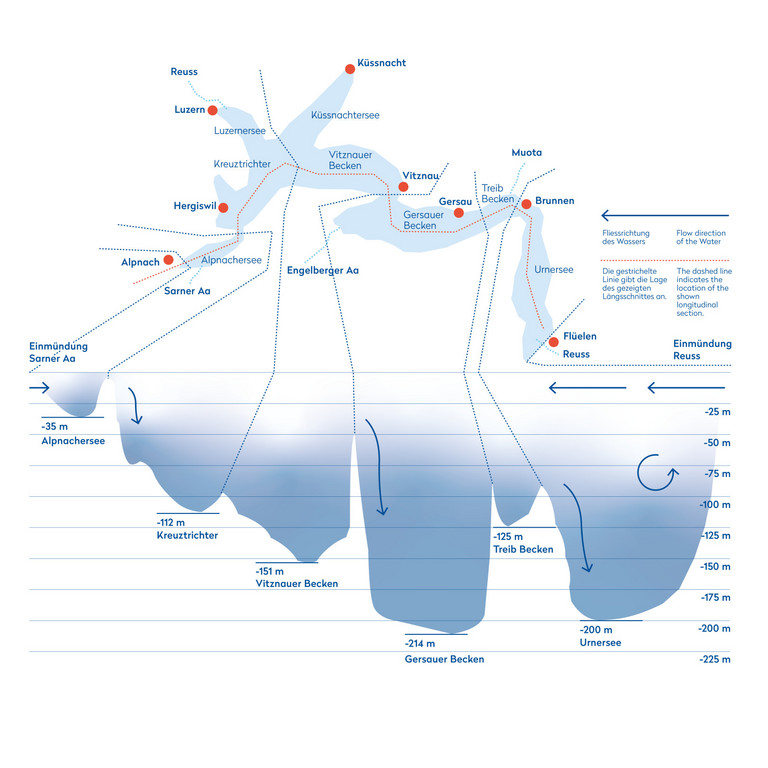
Due to the foehn wind and the inflow of the River Reuss, the deep areas of the Urnersee are better ventilated and warmer than those of the Gersau Basin. This temperature difference drives huge underwater waterfalls from the Gersau Basin into the Urner Basin. Similar deep-water currents also flow from Lake Alpnach via the Kreuztrichter and the Vitznau Basin into the Gersau Basin. There, the water flows close to the bottom in the opposite direction of the surface current.
Did you know…
…that Lake Lucerne owes its name to the “four forest cantons”?
The name goes back to the historic forest cantons of Unterwalden, Schwyz, Uri and Lucerne, which surround the lake and continue to shape its history to this day.
…that tsunamis once raged on Lake Lucerne?
In 1601, following an earthquake, tsunamis occurred on Lake Lucerne, with waves believed to have reached heights of up to 4 metres. Another such event is said to have taken place in 1687.
…that the lake was once an important transport route?
In the past, Lake Lucerne was a key transport axis, and until 1863 it was even the only trade connection to the Gotthard Pass.
…that other bodies of water are also called Lake Lucerne?
Because of its shape, the Jacobiweiher in the Frankfurt city forest is colloquially known as Lake Lucerne. For the same reason, an artificial lake in Berlin Zoo is also referred to as Lake Lucerne.
…that Lake Lucerne is a legacy of the last Ice Age?
Around 12,000 years ago, the lake was formed as a glacial margin lake at the end of the Ice Age. Melting glaciers shaped the fjord-like landscape that makes Lake Lucerne so unique to this day.
Inflow, Delta and Outflow of the Reuss
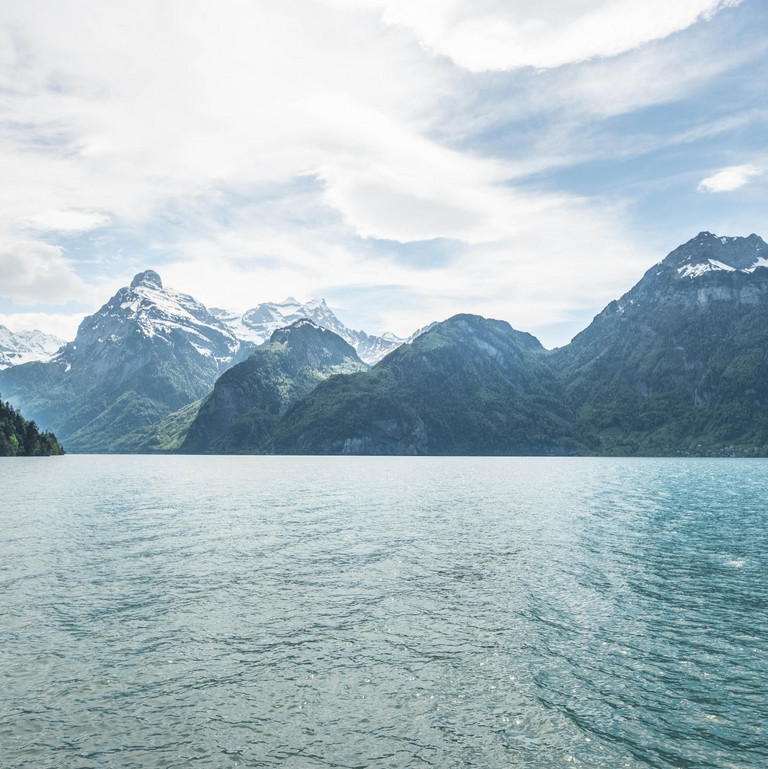
The Reuss near Flüelen and Seedorf, the Sarner Aa near Alpnachstad, the Engelberger Aa near Buochs and the Muota near Brunnen are among the most important inflows to Lake Lucerne. The Reuss in particular, which descends with a steep gradient from the Gotthard massif, carries large quantities of sediment. As a result, the Reuss delta has advanced around ten kilometres northwards into the Urnersee over time.
There is also a single outflow: the Reuss. It leaves Lake Lucerne in Lucerne – regulated by a weir.
Basins and Bays
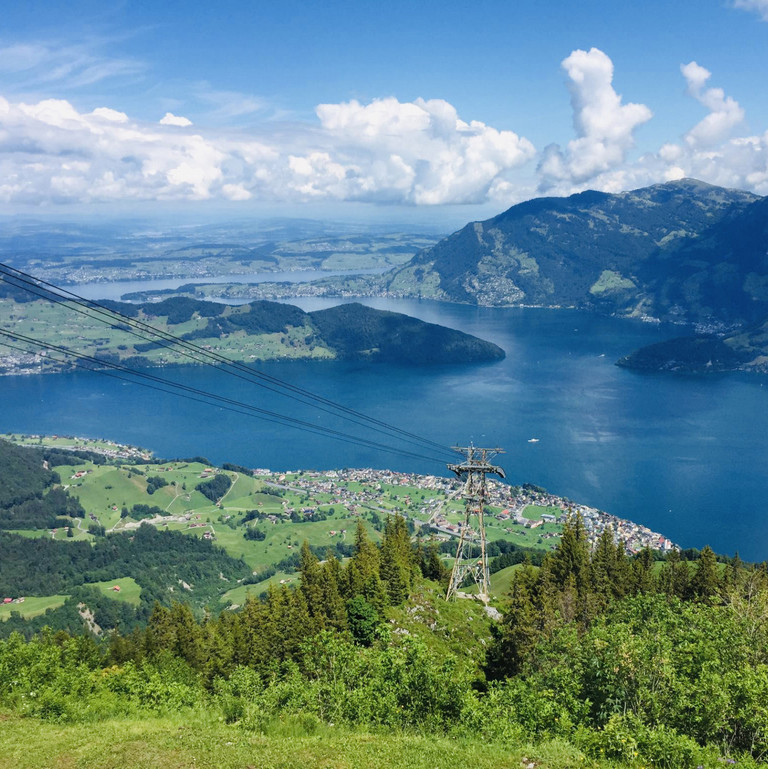
- Urner Basin
- Gersau Basin
- The Chrüztrichter (Kreuztrichter) forms the actual centre of the northern part of the lake in the west of the Weggis Basin
- The Weggis Basin (eastern arm of the Kreuztrichter), also called the Vitznau Basin
- The Stans Funnel
- Horw Bay
- Lake Alpnach
- Lake Küssnacht
- Lucerne Bay